Derila ERGO Memory Foam Pillow
Celliant Sleep Anti Snore Pillow vs Derila Ergo:
Last updated: October 19, 2026 8:00:00 AM
Considering Derila ERGO - Memory Foam Pillow? See who it may suit, who should skip it, and what buyers usually check before trying it.
Deciding between an option associated with Celliant Sleep Anti snore pillow technology and the Derila ERGO - Memory Foam Pillow comes down to whether your primary issue is physical neck posture or specialized textile performance. Many shoppers look at both when they wake up feeling stiff or congested, wondering which style of pillow will actually make a daily difference in their sleep quality. The Derila ERGO - Memory Foam Pillow focuses entirely on physical contouring, using molded foam to cradle the neck and position the head consistently throughout the night. If your main objective is getting predictable structural elevation and keeping your spine in a neutral line, trying this ergonomic model makes practical sense. However, if your search began specifically because of chronic snoring, a molded pillow is only one part of the equation and cannot guarantee an open airway.
The decision to try the Derila pillow should depend on your preferred sleep posture rather than bold marketing promi Cervical Spine Anatomy: C1–C7 Vertebrae, Muscles & Nerves ses about fixing sleep disruptions overnight. Molded memory foam requires an adjustment period, and it feels fundamentally different from traditional down or shredded fills that you can fluff up by hand. If you have already tried flat or overly soft pillows and noticed that your neck lacks firm support when lying on your side or back, moving to an ergonomic foam model is a logical next step. Conversely, if you dislike firm surfaces or frequently shift onto your stomach, you may end up setting it aside after just a few nights. Taking an honest look at your current sleep habits will save you the frustration of choosing the wrong pillow category altogether.
What Derila ERGO - Memor Oct 18, 2026 · The Derila Ergo Pillow features a butterfly-shaped memory foam core designed to encourage a more natural spinal alignment; however, as its popularity has … y Foam Pillow Is Sold As and How People Typically Use It
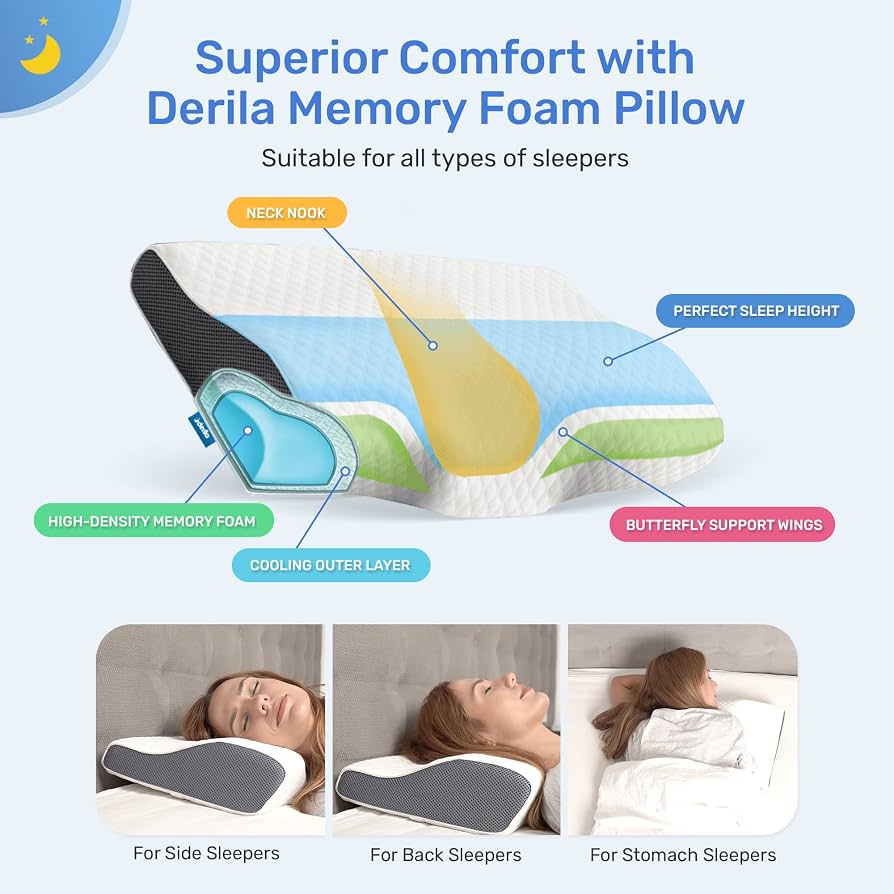
The Derila ERGO - Memory Foam Pillow is sold as a molded ergonomic support pillow designed to promote better spinal alignment during sleep. Unlike standard rectangular pillows that rely on loose fiberfill, this product features defined contours, including a central shallow groove for the head and raised peripheral curves intended to support the cervical spine. It is manufactured from dense memory foam that reacts to weight and warmth, yielding slightly under pressure while maintaining a fixed baseline height. Retailers market this design primarily to individuals who experience morning neck tension, shoulder tightness, or general discomfort caused by sleeping on worn-out bedding. The core pitch is straightforward: by guiding the head into a fixed position, the foam minimizes the unnatural bending of the neck that often happens on flat pillows.
In everyday use, sleepers place the pillow directly on the mattress with the curved cervical support roll facing the foot of the bed. Back sleepers position their head directly in the center depression, allowing the lower raised curve to fit snugly into the space beneath the neck. Side sleepers typically shift slightly toward the outer edges, where the elevated contours bridge the gap between the shoulder and the ear, keeping the head from tilting downward. Because the foam is solid, users do not fluff, fold, or punch the pillow into shape before resting. Instead, they rely on the natural settling of the material to cushion pressure points over the course of the night, while keeping a washable fabric cover over the core to protect the underlying foam from sweat and oils.
Assessing Physical Contouring Against Celliant Sleep Anti Technology
When comparing this ergonomic pillow against products marketed under the Celliant Sleep Anti banner, it helps to understand the fundamental difference in how these designs approach sleep quality. Pillow options utilizing specialized mineral-infused fabrics focus heavily on temperature regulation, local blood flow promotion, and subtle comfort improvements built into the cover textiles. Some are tailored specifically toward snore reduction by attempting to maintain slight elevation through uniform inclines or softer, responsive fiber layers. In contrast, an ergonomic memory foam pillow relies purely on mechanical geometry to affect how you sleep. It does not utilize specialized energy-reflecting fabrics, but instead forces the head and neck to stay within a predetermined channel to prevent excessive lateral twisting.
For individuals trying to decide between these two approaches, the choice hinges on what causes your sleep disruptions. If your snoring stems from poor head angle that allows soft tissue in the throat to collapse when using a completely flat pillow, a contoured neck roll can sometimes encourage a clearer posture. However, neither structural memory foam nor high-tech mineral-infused fabrics serve as medical treatments for deep-seated breathing conditions such as obstructive sleep apnea. If you simply want reliable, firm physical elevation that does not collapse under your head by morning, the molded foam approach is generally more reliable. If your main concern is night sweats, fabric breathability, or avoiding the rigid feeling of molded foam, looking closer at technical textile options may serve you better.
Who It May Suit and W Derila Ergo Memory Foam Pillow Review: Does It Work? Does Derila Ergo Memory Foam Pillow work for neck pain and side sleepers? See our full review covering … ho Should Skip It
This ergonomic model is primarily suited for dedicated back and side sleepers who are unhappy with soft, shapeless pillows. If you consistently wake up with an aching neck because your standard pillow flattens out within two hours of falling asleep, the structural integrity of molded foam can provide noticeable relief. It also works well for people who sleep relatively still throughout the night and appreciate having a defined channel that holds their head centered. Back sleepers benefit from the gentle backward tilt the central hollow creates, which can help keep the neck in a neutral extension without pressing the chin down toward the chest. Side sleepers with average shoulder breadth will also appreciate the raised lateral zones that keep the neck horizontal rather than angled toward the mattress.
On the other hand, stomach sleepers should generally skip this pillow. The contoured heights that protect side and back sleepers will force a stomach sleeper’s neck into an exaggerated upward angle, likely causing lower back strain and neck stiffness by morning. People who frequently rotate through multiple sleeping positions in a single night may also find the rigid layout restrictive, as rolling across the high ridges can be jarring. Furthermore, if you inherently dislike dense memory foam or prefer a plush, moldable feel that you can scrunch under your arm, this structured shape will feel unforgiving. Finally, anyone expecting an ergonomic pillow to cure chronic snoring without addressing underlying nasal, weight, or airway issues will likely be disappointed.
What to Check Befor Oct 18, 2026 · Engineered for optimal cervical support, the Derila pillow aligns your spine for deep, restorative rest. Crafted from high-density … e Buying or Us Honest Derila Ergo Pillow Review: Pros, Cons & What Nobody Mentions ing It
Before committing to a purchase, you should examine your current mattress firmness and your shoulder dimensions. Memory foam pillows do not exist in isolation; they interact directly with how deeply your torso sinks into the bed. If you sleep on an extremely soft mattress, your shoulders will sink into the surface, effectively making the pillow feel much taller and potentially pushing your head too far upward. Conversely, on a very firm mattress, the pillow’s height will remain true, making it crucial that the loft corresponds to the gap between your shoulder and neck. Taking a moment to measure this space while resting in your typical side-sleeping posture will give you a clearer idea of whether the fixed height of the contours will fit your body correctly.
You should also carefully review the seller's return policies, trial periods, and shipping fees. Contoured foam pillows have a notorious break-in period, often taking anywhere from one to two weeks for your muscles to adapt to the enforced alignment. During this initial phase, some users experience temporary muscle soreness simply because their neck is being held in an unfamiliar position. You need to verify whether the merchant permits returns of opened bedding if your body fails to adapt after ten days of regular use. Lastly, prepare for standard memory foam off-gassing by planning to let the pillow air out in a well-ventilated room for a couple of days before putting your pillowcase on and sleeping on it.
Frequently Asked Questions
Can the Derila ERGO - Memory Foam Pillow stop heavy snoring?
While improved ne BEST Definition & Meaning - Merriam-Webster 5 days ago · In the best of all possible worlds, no one would be without food and clean water. I have a wonderful … ck alignment can help keep upper airways open for some back sleepers, this pillow cannot guarantee an end to heavy snoring. Snoring is often caused by factors that a pillow cannot change, such as nasal congestion, soft palate anatomy, alcohol consumption, or underlying sleep apnea. If your snoring happens primarily because an old, sagging pillow allows your chin to drop toward your chest, the raised neck support may provide some relief. However, it should never be viewed as a substitute for an evaluation by a qualified physician if breathing interruptions occur during sleep.
How long does it take to get used to the ergonomic shape?
Most people require anywhere from three to fourteen consecutive nights to feel comfortable on a contoured memory foam pillow. Because the shape holds your head in a fixed position, the muscles and ligaments in your neck may feel mildly fatigued during the first few days of use. This sensation is similar to the mild stiffness you might experience when switching to an ergonomic office chair after years of slouching. Giving your body at least a full week of consistent use is usually necessary before deciding whether the support profile actually works for your neck.
Is this pillow suitable for people who sleep on their stomach?
This pillow is generally unsuitable for dedicated stomach sleepers due to its elevated contours and fixed loft. Sleeping face down on a contoured memory foam pillow forces the cervical spine into extreme backward extension, which frequently causes neck and lower back discomfort. Stomach sleepers require exceptionally flat, thin pillows or no pillow at all to keep their spine in a reasonably neutral posture. If you spend the vast majority of the night on your stomach, you should look for low-loft, flat bedding rather than an ergonomic contour design.
How do you care for and clean this pillo Best Buy | Official Online Store | Shop Now & Save w over time?
You should clean the removable outer cover by washing it according to the care label instructions, typically on a gentle cycle with mild detergent. The inner memory foam core, however, must never be submerged in water, placed in a washing machine, or put into a clothes dryer. Soaking memory foam degrades the cell structure, causing it to tear, lose its shape, and retain moisture tha Cervical vertebrae - Wikipedia In sauropsid species, the cervical vertebrae bear cervical ribs. In lizards and saurischian dinosaurs, the cervical ribs are … t can lead to mildew. If the foam core gets dirty, gently spot-clean the area with a damp cloth and mild soap, then allow it to air-dry completely away from direct sunlight and heat.
Does the memory foam have a strong chemical smell when opened?
Freshly unboxed memory foam products frequently release a temporary scent known as off-gassing, which is a normal byproduct of the manufacturing and packaging process. This odor is typically harmless, but it can be noticeable and unpleasant for individuals with sensitive respiratory systems or heightened smell. To minimize discomfort, remove the outer cover and place the foam core in a well-ventilated room or near an open window for twenty-four to forty-eight hours before use. Once the pillow has properly aired out, the initial manufacturing odor will dissipate and should not linger during normal nighttime use.