Derila ERGO Memory Foam Pillow
Does the Derila Ergo Freeze in Cold Weather? Read This Before You Buy
Last updated: October 18, 2026 8:00:00 AM
Considering Derila ERGO - Memory Foam Pillow? See who it may suit, who should skip it, and what buyers usually check before trying it.
When temperatures drop during the colder months of the year, owners of contour pillows often discover that their bedding feels significantly firmer than it did during the summer. If you have been wondering why do memory foam bedding items stiffen up in low temperatures, the answer lies in the fundamental nature of viscoelastic material rather than any specific manufacturing flaw. The Derila ERGO - Memory Foam Pillow will not literally freeze into solid ice, but its core becomes noticeably rigid and slow to respond when left in a chilly, unheated bedroom. As soon as you lie down, your natural body heat begins to transfer into the material, which gradually restores its pliable, contouring feel. Deciding whether to try this pillow ultimately depends on whether you are comfortable waiting through a few minutes of initial density each night before it softens into its intended ergonomic shape.
If you are looking for an immediate verdict on whether this pillow is worth testing, the deciding factor is your personal tolerance for that seasonal transition period. Shoppers who expect an instantly plush, feather-soft surface the moment their head touches the fabric may find the winter firmness off-putting. On the other hand, individuals who prioritize structured cervical alignment and keep their bedrooms at a moderate temperature are unlikely to view this cold-weather quirk as a serious drawback. The pillow performs its core function of keeping your spine positioned once it adapts to your head and neck, provided you give it time to acclimate. Understanding how your local climate and indoor heating habits interact with viscoelastic foam will give you an accurate picture of what to expect before you commit to an order.
What Derila ERGO - Memory Foam Pillow Is Sold As and How People Typically Use It
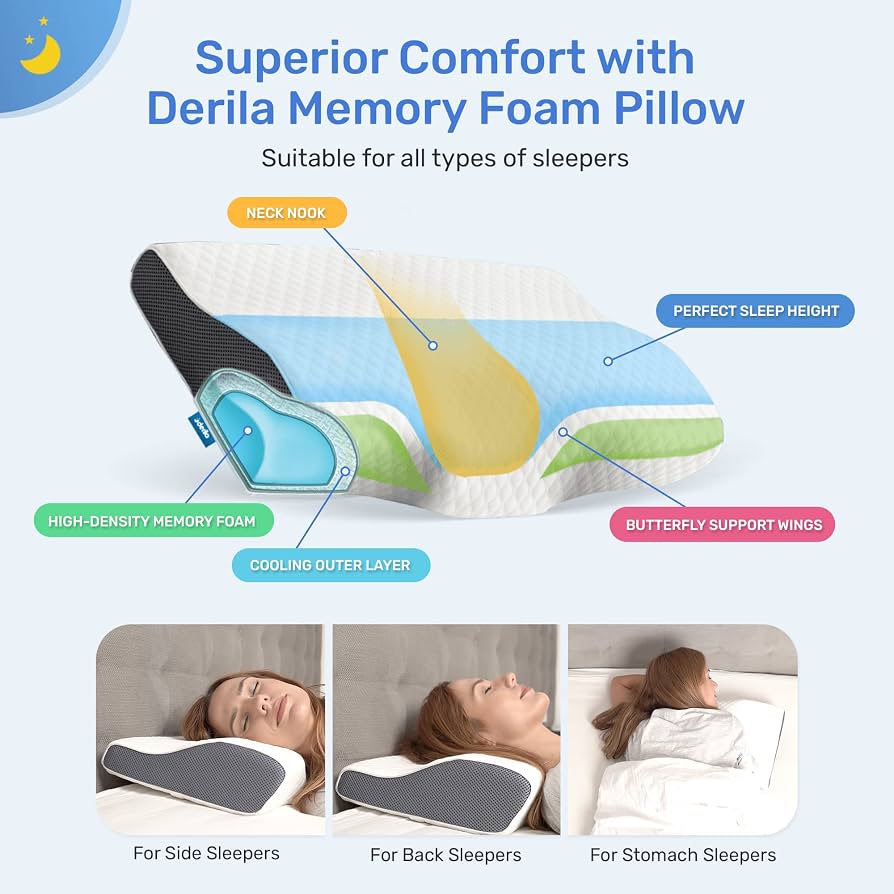
The Derila ERGO - Memory Foam Pillow is marketed as an ergonomic sleep accessory engineered to support natural cervical curvature and reduce daily tension. Rather than using loose shredded foam or traditional polyester batting, it features a solid molded block of viscoelastic foam with distinct contours. These curves include a central hollow designed to cradle the back of the head, a curved support ledge intended to fit beneath the neck, and slightly elevated side wings meant to support side sleepers. The primary sales pitch centers on postural alignment; the shape is meant to keep the neck and upper spine in a neutral line so that muscles can relax overnight instead of working to stabilize an awkward head position. It is framed as an accessible alternative to expensive custom orthopedic pillows, packaged with a removable, washable cover for basic hygiene and breathability.
In everyday practice, sleepers use this contour model to replace their existing stack of conventional bed pillows. Most people introduce it to their nighttime routine to see if it lessens morning stiffness, particularly around the trapezius muscles and cervical spine. Back sleepers rest their neck along the central roll with the back of their skull nestled into the groove, allowing the contour to fill the space between the mattress and the nape of the neck. Side sleepers typically turn their shoulders perpendicular to the mattress and place their head onto the elevated outer sections, which helps keep the neck from angling down toward the bed or bending upward. Because the contour is fixed and pre-formed, users generally stay in one or two deliberate sleep orientations throughout the night rather than bunching, folding, or fluffing the pillow as they would with a traditional down alternative.
Who It May Suit and Who Should Skip It
This pillow is best suited for back and side sleepers who actively appreciate firm, reliable cervical support and sleep in temperature-controlled spaces. If you routinely wake up feeling that your neck has collapsed into an unsupported angle on an old, flattened cushion, a structured contour can provide the rigid foundation you need. It works particularly well for people who stay relatively still throughout the night, because once your head settles into the groove and warms the foam, the material holds that customized impression steadily until morning. Furthermore, individuals whose homes maintain a consistent indoor temperature year-round will experience the intended balance of support and pressure relief without having to deal with excessive seasonal hardening.
Conversely, there are several types of sleepers who should skip this pillow entirely. Dedicated stomach sleepers will almost certainly find the pre-molded elevation too high, as contour rolls tend to bend the neck backward into an unnatural angle when resting face down. Anyone who prefers an airy, cloud-like surface that compresses instantly with zero resistance wil Home – derilasleepcomfort Engineered for optimal cervical support, the Derila pillow aligns your spine for deep, restorative rest. Crafted from high-density … l find dense molded foam frustrating and unyielding. You should also pass on this model if you keep your bedroom unheated throughout the winter and dislike resting against a firm surface, as the initial cold stiffness will be noticeable every time you get into bed. Finally, restless sleepers who roll continuously from stomach to side to back may find the distinct hills and valleys of the ergonomic shape restrictive rather than comforting.
What to Check Before Buying: Why Do Memor Oct 18, 2026 · Derila Cervical Neck Pillow for Sleeping, Memory Foam 19.7 x y Pillows React to Cold?
Before finalizing a purchase, it is vital to examine your sleep environment and understand the physical mechanisms at play. When consumers ask why do memory foam products react so strongly to winter temperatures, the answer comes down to cellu Oct 16, 2026 · Shop Best Buy for electronics, computers, appliances, cell phones, video games & more new tech. Store pickup & free 2-day …Read more lar chemistry. Viscoelastic foam is constructed from polyurethane polymers that are engineered to become viscous under heat and pressure, which allows the material to yield and absorb weight. When the surrounding air drops below typical room temperature, those polymer chains contract and lock together, resulting in a dense, hard block that resists indentation until an external heat source—such as your body—warms them up. Before buying, check where your thermostat sits during sleeping hours; if your bedroom routinely dips below average indoor temperatures, you must be prepared to let the pillow warm under your neck for a few minutes before expecting any contouring relief.
You should also carefully verify the purchase terms, trial windows, and return conditions offered by the vendor. Ergonomic contours are highly individualized, meaning a contour height that feels supportive to a broad-shouldered side sleeper might feel excessively tall or rigid to someone with a smaller frame. Check whether the seller permits returns after the packaging has been opened, as you will need at least a week or two of sleeping on the pillow to determine whether the loft fits your body geometry. Additionally, p Derila Ergo Memory Foam Pillow Review: Does It Work? lan for a short off-gassing and acclimation phase when the package arrives. Freshly unboxed molded foam often retains a temporary manufacturing scent, so checking that you have a clean, dry, well-ventilated space to let it expand at room temperature for a couple of days will ensure the smoothest possible start.
Fre Amazon.com: Derila Pillow quently Asked Questions
Does the pillow become completely hard if the bedroom is unheated?
A bedroom kept at low tempe Oct 18, 2026 · Derila Ergo Memory Foam Pillow Review: Does It Work? Does Derila Ergo Memory Foam Pillow work for neck pain and side sleepers? See our full review covering … ratures will cause the pillow's internal foam core to feel substantially firmer than normal. Because viscoelastic material relies on ambient warmth to maintain its flexible state, colder air restricts the movement of its internal polymers. The pillow will not actually freeze into frost or fracture, but it can feel quite solid under your head when you first lie down. Within several minutes of steady contact with your skin, the foam absorbs your body heat and softens into its supportive contour. If your sleeping space consistently stays near freezing temperatures, you should expect this firm starting texture every single evening.
How long does it take for body heat to soften the foam?
For most individuals, the transition from cold firmness to proper contouring takes between two and five minutes. The exact speed of this reaction depends on your ambient bedroom temperature and how much heat your head and neck radiate into the cover. Back sleepers typically experience faster softening because a larger surface area of the head and upper neck rests directly against the central cradle. Side sleepers may feel the elevated side wings remain somewhat rigid for an extra minute or two before the foam yields beneath the jaw and cheek. Leaving your regular bedroom blanket pulled up over the pillow prior to going to sleep can help shorten this warm-up time.
Can using an electric blanket or heating pad damage the pillow?
Applying intense, direct heat from an electric blanket or heating pad directly onto memory foam is generally not recommended. Excessive heat can permanently degrade the foam's internal structure, causing it to lose its supportive resilience prematurely. If you want to warm your bedding before going to sleep, you can place a warm blanket over the pillow on a low setting for a brief duration. Never place a high-heat device directly against the bare foam core without the protective cover in place. Allowing your own natural body heat to soften the material remains the safest method for preserving the pillow over multiple seasons.
Is the Derila ERGO pillow suitable for people who sleep on their stomach?
Stomach sleepers often struggle with contoured ergonomic pillows because the raised neck roll can push the cervical spine backward into hyperextension. While some stomach sleepers attempt to use the lowest section of the pillow, the sculpted shape is primarily engineered for back and side alignment. When the foam is cold and stiff, this lack of flexibility can feel even more intrusive under the chest or neck. Those who spend the entire night flat on their stomachs are usually better served by very low-loft, traditional flat cushions. However, combination sleepers who only start on their stomach before shifting to their side may still find acceptable positions over time.
How should the pillow be cared for during seasonal temperature shifts?
Caring for a memory foam pi Derila Cervical Neck Pillow for Sleeping, Memory Foam 19.7 x The Derila Cervical Neck Pillow has a contoured memory foam shape that supports your head and neck … llow across changing seasons mainly involves protecting the core from moisture and extreme temperature swings. You should regularly remove and wash the outer protective fabric cover while keeping the interior foam completely dry. Submerging the foam core in water or placing it in an automated dryer can ruin the delicate cellular composition. If the pillow feels unusually stiff after being stored in a cold closet, allow it to sit in a heated room for several hours before use. Routine airing in a dry, room-temperature space helps maintain fresh airflow without exposing the material to harsh direct sunlight.