Derila ERGO Memory Foam Pillow
How Many Memory Foam Pillows Should You Sleep On Based on Your Sleep Position
Last updated: October 18, 2026 8:00:00 AM
Looking up How Many Memory? See how Derila ERGO - Memory Foam Pillow is used day to day, where it fits, and what to check before you try it.
When setting up your bed for a restful night, the standard rule of thumb is to use only one pillow beneath your head. Memory foam is engineered to respond to body heat and pressure, which allows it to mold directly to your contours rather than collapsing flat like down or polyester fiber. If you find yourself asking how many memory foam cushions are necessary for proper sleep, stacking multiple units under your skull is almost always the wrong approach. Stacking dense foam creates an unstable, overly steep incline that forces the cervical spine out of its natural, neutral alignment. Achieving genuine comfort comes down to selecting a single surface with the right thickness and density rather than piling multiple pillows on top of one another.
Your preferred sleeping posture dictates the exact amount of space that needs to be filled between your head, neck, and the mattress. Side sleepers naturally have a broader space to bridge because the shoulder bears the body's weight, whereas back sleepers rest much closer to the mattress surface. Stomach sleepers face the opposite situation entirely, requiring minimal elevation so the neck does not bend backward into an unnatural angle throughout the night. When people feel that a single pad is insufficient, the issue is almost never an absence of extra layers, but rather an incorrect shape or inadequate firmness in the one they already own. Evaluating your personal posture helps you choose a single dedicated support that stabilizes your neck without requiring awkward adjustments.
How Many Memory Foam Pillows to Use Based on Your Sleep Position
Determining how many memory foam cushions you need requires looking at your body from the side while resting in your typical sleep posture. For the area under your head, the answer across virtually all sleep styles is strictly one. A single memory foam pillow is dense enough to prevent bottoming out, meaning your head will not sink entirely through to the mattress surface. When side sleepers stack two foam pillows, the upper vertebrae are forced sharply upward toward the ceiling, creating tension along the neck muscles and shoulder joints. Back sleepers who double up find their chin driven down toward their chest, which can restrict airflow and strain the upper back. Stomach sleepers who attempt to use two pillows introduce a severe upward bend in both the cervical and lumbar regions, which disrupts normal resting posture. One properly sized foam pillow maintains a horizontal, neutral line through your spine from the base of your skull down to your tailbone.
While you should never place more than one memory foam unit directly under your head, a second pillow can serve an intentional purpose elsewhere on the bed. Side sleepers often benefit from placing a secondary pillow between their knees to keep the pelvis, hips, and lower back square throughout the night. Back sleepers can place a second pillow beneath their knees to relieve tension in the lower back by allowing the lumbar curve to settle naturally against the mattress. Stomach sleepers who experience lower back tightness sometimes position a very thin cushion under their lower abdomen and pelvis to keep their midsection from sinking too deeply into the bed. In these cases, the second pillow is used as a postural stabilizer for the limbs or torso, never as an additional booster underneath your neck.
Where Derila ERGO - Memory Foam Pillow Fits into Your Sleep Routine
The urge to stack pillows usually arises when a conventional rectangular cushion fails to support the natural curve of the neck. This is where an ergonomically shaped option like the Derila ERGO - Memory Foam Pillow fits into an everyday sleep setup. Instead of presenting a uniform, flat slab of foam that leaves the hollow of the cervical spine unsupported, an ergonomic design features deliberate contours that cradle the head while elevating the neck. By filling that natural gap directly, the Derila ERGO - Memo Cervical vertebrae - Wikipedia In sauropsid species, the cervical vertebrae bear cervical ribs. In lizards and saurischian dinosaurs, the cervical ribs are … ry Foam Pillow removes the sensation that your head is tilting backward or lacking foundational support. Consequently, you no longer feel the need to shove a second pillow underneath to achieve the elevation your shoulders and neck require.
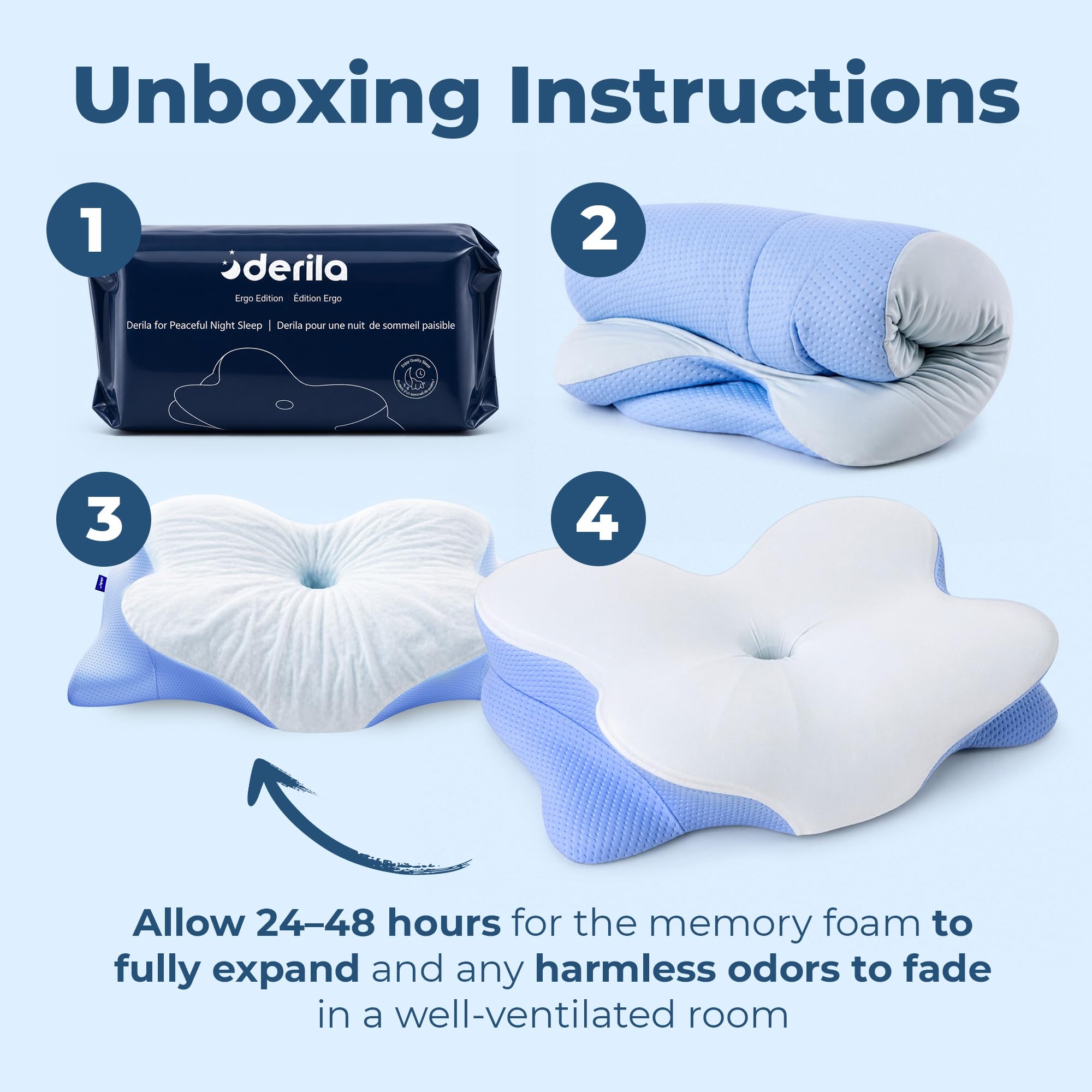
Incorporating the Derila ERGO - Memory Foam Pillow into your nightly routine works best when you treat it as your primary, standalone headrest. Side and back sleepers can settle into the molded central groove, allowing the raised side edges to hold the head in place without unexpected shifting. Because memory foam requires direct contact with body heat to adjust to your contours, placing another pillow above or below it prevents the material from functioning as intended. Using this contoured pillow on its own allows the structured foam to bear the weight of your head evenly, providing steady contact without the wobbling or sliding common with stacked bedding. It streamlines your sleeping area by replacing multiple flat cushions with a single m Oct 16, 2026 · BEST Definition & Meaning - Merriam-Webster 4 days ago · In the best of all possible worlds, no one would be without food and clean water. I have a wonderful … olded unit tailored to natural human mechanics.
Practical Mistakes to Avoid When Setting Up Your Bedding
A frequent mistake sleepers make is attempting to combine memory foam with traditional soft pillows in a single stack. Placing a responsive foam pillow on top of an old down or fiberfill pillow creates an unstable foundation that shifts whenever you roll over. The soft bottom pillow compresses unevenly under the weight of the foam, which completely negates the supportive geometry built into the top layer. Conversely, burying a supportive foam pillow underneath a fluffy top pillow prevents your head and neck from making direct contact with the contoured surface, ruining its ability to adapt to your shape. If you want to use memory foam, commit to using it directly on the mattress surface so its material properties can work without interference from unstable layers beneath.
Another common oversight is failing to consider how the firmness of your mattress influences the height your pillow needs to be. A plush, soft mattress allows your hips and shoulders to sink deeply into the bed, which brings your neck closer to the surface and reduces the thickness required from your headrest. On a very firm mattress, your shoulders stay elevated on top of the surface, leaving a larger gap that requires a slightly fuller, more resilie Oct 17, 2026 · Best Buy | Official Online Store | Shop Now & Save Shop Best Buy for electronics, computers, appliances, cell phones, video games & more new tech. Store pickup … nt profile. Many people mistakenly purchase a second pillow to solve what is actually a mismatch between their pillow profile and their mattress firmness. Additionally, sleepers often abandon a single ergonomic foam pillow too quickly, forgetting that adapting to structured support takes several nights of consistent use if they are accustomed to folded, flattened, or stacked traditional pillows.
Frequently Asked Questions
Can using two memory foam pillows cause morning neck stiffness?
Yes, sleeping on two stacked memory foam pillows places your neck at an exaggerated, unnatural angle for hours at a time. Because memory foam is inherently dense, stacking two cushions creates a rigid incline that bends your cervical spine out of alignment. Back sleepers will wake with their chin forced toward their chest, while side sleepers will experience uneven lateral strain along their neck and shoulder muscles. Over several nights, this continuous postural distortion can lead to muscular tightness, tension headaches, and localized soreness. Using a single pillow designed with the proper loft for your sleeping style is the most reliable way to avoid these issues.
What should stomach sleepers do if a standard memory foam pillow feels too elevated?
Stomach sleeping naturally forces the head to turn sharply to one side, meaning any significant pillow height will push the neck backward and upward. If your current foam pillow feels too tall, you should switch to an ultra-thin, low-profile design rather than trying to compress or fold what you have. Some stomach sleepers find the best comfort by resting their forehead on the very edge of a flat pillow to leave their breathing passage clear without bending the neck. Others choose to sleep with no pillow under their head at all, instead placing a thin pad under their pelvis to keep the spine level. Stacking is especially harmful for stomach sleepers and should always be avoided.
How do you know if your single memory foam pillow is the right height?
You can evaluate your pillow's height by having someone take a photograph of your posture while you rest in your usual sleeping position. When lying on your side, your nose, chin, breastbone, and navel should form a straight, horizontal line parallel to the surfa Oct 18, 2026 · Honest Derila Ergo Pillow Review: Pros, Cons & What Nobody Mentions The Derila Ergo Pillow features a butterfly-shaped memory foam core designed to encourage a … ce of the bed. When lying on your back, your head should not tilt backward into an arch, nor should your chin be pushed forward toward your chest; your gaze should naturally fall straight up toward the ceiling. If your ears are pushed forward or sideways relative to your shoulders, the pillow profile is likely incorrect for your frame. A pillow that holds your head neutral without muscular effort to stay in place is the correct height.
Is it safe to place a mem BEST Definition & Meaning - Merriam-Webster 5 days ago · In the best of all possible worlds, no one would be without food and clean water. I have a wonderful … ory foam pillow between your knees?
Placing a memory foam pillow between your knees is entirely safe and often recommended for side sleepers seeking better hip alignment. When you sleep on your side, your upper leg tends to slide forward and drop down onto the mattress, which pulls the pelvis out of square and twists the lower back. A medium-density memory foam pillow placed between the knees acts as a spacer, keeping the knees stacked and the hips evenly aligned throughout the night. Memory foam is well-suited for this role because it cushions the bony inner surfaces of the knees without collapsing completely under the weight of your leg. Just ensure the knee pillow is not excessively thick, which could force your hips too far apart.
How lo Oct 18, 2026 · Amazon.com: Derila Pillow Discover Derila memory foam pillows designed for side, back, and stomach sleepers. Contoured support for better sleep and comfort. ng does it usually take to get used to a contoured memory foam pillow?
Adjusting to a contoured memory foam pillow typically requires anywhere from a few days to two full weeks of consistent use. If you have spent years sleeping on soft, unstructured pillows or stacking worn-out cushions, your muscles have adapted to compensating for unstable support. Switching to a firm, molded shape like the Derila ERGO - Memory Foam Pillow holds your head in a fixed, neutral position that may feel unfamiliar or restrictive during the first few nights. Furthermore, new memory foam often needs a short break-in window to respond fully to your body heat and soften to its intended resting density. Give your body at least ten to fourteen consecutive nights to adapt before deciding whether the shape suits your needs.