Derila ERGO Memory Foam Pillow
How to Position the Derila Ergo Memory Foam Pillow for Side and Back Sleepers
Last updated: October 18, 2026 8:00:00 AM
Looking up How to Sleep? See how Derila ERGO - Memory Foam Pillow is used day to day, where it fits, and what to check before you try it.
Finding the right way to rest starts with keeping your spine, neck, and head balanced in a straight, neutral line throughout the entire night. When you sleep on your back, your head should sit level without tilting forward toward your chest or tipping backward into the mattress. For side sleepers, the natural gap between the outer edge of the shoulder and the side of the head requires adequate support so the neck does not bend laterally. Learning how to sleep with deliberate physical alignment helps distribute your body weight evenly across the bed rather than concentrating pressure in the delicate cervical muscles. Setting up your body correctly creates the foundation for sound sleep before you ever consider introducing specialized bedding tools.
Beyond the position of your head and neck, proper rest requires conscious attention to the rest of your body from the torso down to your feet. Back sleepers generally benefit from maintaining a slight, gentle bend in the knees or placing a small secondary pillow under the thighs to keep the lower back from arching off the mattress. Side sleepers typically find the most stability by drawing their knees slightly toward the chest and placing a firm cushion between them to prevent the upper pelvis from rotating forward. When you take the time to settle into these foundational postures before drifting off, your muscles can relax fully rather than working to hold your frame in place. Developing this baseline physical awareness is the essential first step in understanding how to sleep comfortably on any surface.
Mas Home – derilasleepcomfort Engineered for optimal cervical support, the Derila pillow aligns your spine for deep, restorative rest. Crafted from high-density … tering How to Sleep with Neutral Spinal Alignment
Achieving balanced alignment as a back sleeper begins by recognizing the natural inward curve of your cervical spine. When you lie flat on your back, your upper back and the back of your skull make direct contact with the sleep surface, leaving an unsupported hollow behind the neck. To protect the spine, this hollow must be filled with just enough elevation to support the curve without pushing the head upward. If your pillow is too thick, your neck is forced into forward flexion, which stretches the muscles along the back of the neck and can compress the airway. Conversely, if your resting surface is too flat, gravity pulls the head downward into hyperextension, tightening the throat and straining the lower ce Oct 18, 2026 · Amazon.com: Derila Pillow rvical vertebrae. Your arms should rest naturally along your sides or lightly across your lower abdomen, allowing your shoulders to drop back and remain flat against the mattress surface.
Side sleeping presents a different physical challenge because your shoulder width creates a substantial gap between your ear and the mattress. To maintain a straight line from the base of the skull down through the thoracic spine, your head must be supported at a height that precisely matches the distance from your neck to the outside of your shoulder joint. If the head rests too low, the neck bends sideways toward the mattress, creating compressive forces on the bottom side of the neck and tensile strain on the top side. If the support is too tall, the neck bends upward toward the ceiling, causing the same uneven tension in reverse. Furthermore, the lower shoulder should not be tucked underneath your torso or pulled forward into a hunch; instead, it should rest flat against the mattress just beneath the edge of the head support, leaving the arm free to rest gently in front of you.
How the Derila ERGO - Memory Foam Pillow Supports Proper Posture
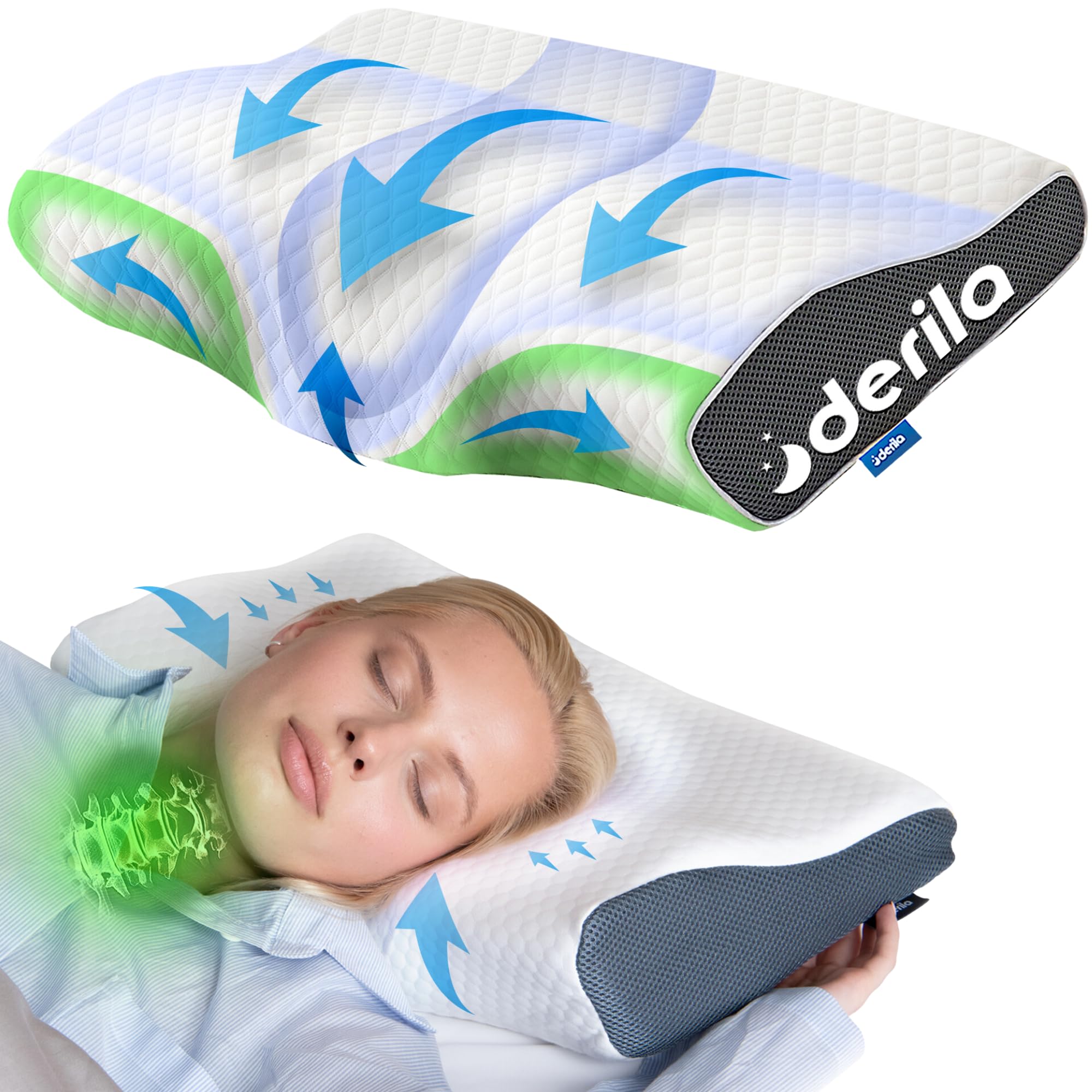
This is where the Derila ERGO - Memory Foam Pillow fits into the physical mechanics of healthy rest. Standard fiber or down pillows tend to shift, clump, or flatten under the continuous weight of the head, requiring you to bunch them up repeatedly throughout the night. The Derila ERGO - Memory Foam Pillow uses high-density responsive foam designed to hold a stable contour while molding to the specific shape of your head and neck. For back sleepers, the integrated cervical roll fills the gap beneath the neck, while the shallow central cavity allows the back of the head to rest comfortably at mattress level. Because the foam yields gradually to body heat and weight, it cradles the occipital area without forcing the chin toward the chest, preserving the natural lordotic curve of the neck for hours at a time.
For those who spend the night on their side, the Derila ERGO - Memory Foam Pillow provides raised lateral sections that accommodate shoulder clearance. When positioned correctly, the firmer, elevated side areas bridge the empty space between the ear and the mattress, keeping the cervical vertebrae horizontally aligned with the rest of the spine. The contoured edge fits snugly against the curve of the neck while leaving sufficient room for the shoulder to remain flat on the bed. By using the Derila ERGO - Memory Foam Pillow in this manner, side sleepers avoid the common problem of waking up to a flattened cushion that has allowed the head to drop sideways. The structural resilience of the memory foam maintains its height th Cervical vertebrae - Wikipedia In sauropsid species, the cervical vertebrae bear cervical ribs. In lizards and saurischian dinosaurs, the cervical ribs are … rough the night, providing steady physical support that helps keep the upper body stable.
Common Posture Mistakes That Interfere with Restful Sleep
One of the most frequent mistakes people make when trying to improve their sleeping posture is stacking multiple pillows under their head. Layering traditional pillows creates an unstable, shifting incline that almost always forces the neck into unnatural angles and pushes the head forward. Another widespread error is allowing the shoulder to creep up onto the pillow itself. When the shoulder rests on the pillow rather than flat on the mattress, the body is tilted sideways, tilting the upper spine and negating the benefits of any contoured shape. Back sleepers also often make the mistake of letting their head roll sharply to one side while their torso stays facing the ceiling, which introduces sustained rotational twist into the cervical joints over several hours.
Lower-body misalignment is another factor that can disrupt your upper-body setup. When side sleepers allow their top leg to slide forward onto the mattress, the pelvis twists, pulling the lower back and thoracic spine out of alignment and eventually straining the neck. Similarly, sliding into a hybrid half-stomach, half-side position causes severe twisting of the spine, as the head must turn nearly ninety degrees to keep the airway open. Finally, many people abandon proper ergonomic positioning too quickly because it feels unfamiliar on the first night. Retraining the body to rest in neutral alignment requires patience, as tight muscles and habitual postures need several consecutive nights to adjust to balanced structural support.
Frequently Asked Questions About Positioning and Sleep Posture
Which side o Oct 17, 2026 · Order Derila Pillow From Official Store | Derila Order Derila's ergonomic memory foam pillow. Butterfly shape provides superior neck support for all sleep … f an ergonomic memory foam pillow should face toward the body?
Contoured memory foam pillows generally feature an asymmetrical shape with one higher contoured ridge and one lower ridge. Back sleepers typically find the lower ridge more comfortable because it provides gentle support under the neck without Oct 18, 2026 · Honest Derila Ergo Pillow Review: Pros, Cons & What Nobody Mentions pushing the head upward. Side sleepers usually prefer the higher ridge, which fills the larger gap created by the width of the shoulder. You should place the chosen ridge directly beneath the curve of your neck so that your head settles into the central depression. If you feel your chin pointing downward or your neck arching backward, rotate the pillow to test the opposite contour.
How long does it take to get used to a contoured memory foam pillow?
Adjusting to a contoured pillow usually requires an adaptation period ranging from a few nights to about two weeks. Because structured memory foam holds its form rather than flattening like soft down or polyester, your muscles may initially feel the resistance of being held in an unfamiliar position. During the first several nights, you might find yourself shifting around as your neck and shoulders adjust to the continuous support. It is advisable to commit to using the pillow consistently each night rather than switching back and forth to an old pillow. Giving your body sufficient time to settle allows your neck muscles to relax into the neutral posture.
Can stomach sleepers use the Derila ERGO - Memory Foam Pillow?
The Derila ERGO - Memory Foam P Derila Ergo Memory Foam Pillow Review: Does It Work? Does Derila Ergo Memory Foam Pillow work for neck pain and side sleepers? See our full review covering … illow is engineered specifically to match the biomechanics of back and side sleeping, making it less suitable for stomach sleeping. Lying face down requires turning the neck sharply to one side, and resting on a raised foam contour in that position can exaggerate the angle and place excess strain on the neck joints. If you sleep on your stomach, elevated contours will push the head backward, which compromises neutral spinal posture. However, you can use the pillow to help train yourself to transition away from stomach sleeping by practicing lying on your side or back. Those who must sleep on their stomachs generally need an extremely flat, low-profile pillow rather than a contoured model.
Where should back sleepers position their shoulders relative to the pillow?
Back sleepers should ensure that their shoulders remain entirely off the pillow and resting flat against the mattress surface. The lower edge of the contour should tuck right up against the base of the neck, supporting the cervical spine without lifting the upper back. Resting your shoulders on the edge of the pillow elevates the entire upper torso and prevents the contoured cavity from doing its job. Your arms should be positioned down by your sides or resting gently across your stomach rather than tucked up under your head. Keeping your shoulders down and away from the pillow keeps your chest open and your neck relaxed throughout the night.
What should I do if my neck feels stiff after using a memory foam pillow?
Experiencing mild tightness during the first few days is relatively common as your neck adapts to a firmer, more structured surface. First, check your posture in a mirror while lying down to verify that your head is not tilted too high or low. If you are sleeping on the higher ridge, try rotating the pillow to the lower ridge to see if a lower profile relieves the tension. Make sure your shoulder is resting on the mattress and not pressing into the foam itself. If your mattress is excessively soft or saggi Honest Derila Ergo Pillow Review: Pros, Cons & What Nobody Mentions The Derila Ergo Pillow features a butterfly-shaped memory foam core designed to encourage a … ng, it may be causing your hips to sink deeper than your head, which can also contribute to upper body tension.