Derila ERGO Memory Foam Pillow
Is Your Memory Foam Pillow Too Firm? How to Make It Softer Tonight
Last updated: October 19, 2026 8:00:00 AM
Looking up How to Make? See how Derila ERGO - Memory Foam Pillow is used day to day, where it fits, and what to check before you try it.
A new memory foam pillow often arrives feeling surprisingly dense, rigid, and unyielding compared to what you anticipated when ordering. If you are struggling to fall asleep right now because your neck is propped at an awkward angle, knowing how to make the material soften quickly can save your night. Memory foam is a temperature-sensitive, viscoelastic material that naturally responds to warmth and sustained pressure, meaning its internal cell structure relaxes under heat. The fastest way to reduce that excessive firmness before bed is to gently increase the ambient room temperature, introduce mild external warmth like an electric blanket set on low, or use your hands to firmly knead and compress the block of foam. Doing this directly breaks the initial rigidity of the factory-sealed cells without damaging the integrity of the foam itself.
Taking a few moments to manually flex and warm the material can transform a stubborn block into a supportive, contouring cushion in less than an hour. Many people make the mistake of sleeping on an ice-cold pillow or assuming the product is fundamentally defective, when in reality memory foam simply requires an initial break-in period. You can place the pillow in a warm room, roll it up firmly like a sleeping bag, and unroll it repeatedly to encourage airflow through the internal matrix. Applying your own body heat while resting quietly for twenty minutes also allows the viscoelastic surface to slowly mold around your specific contours. With these simple adjustments, you will discover how to make your bedding significantly more forgiving before you switch off the lights for the night.
Step-by-Step Techniques: How to Make Dense Memory Foam Softer
The most reliable physical method for loosening tight foam cells relies on manual compression and gentle mechanical flexing. When memory foam is poured and cured during manufacturing, the tiny polyurethane bubbles form tight cross-linked bonds that hold their shape rigidly until they are physically exercised. To break this surface tension, lay the pillow flat on a clean surface or on your bed and use your hands, knees, or forearms to press down methodically from one edge to the other. You can punch, knead, and fold the pillow in half, holding the fold for a few seconds before letting it expand again, repeating this process for roughly ten to fifteen m Oct 18, 2026 · What Is Cervical Cancer? - NCI Jun 15, 2023 · Long-lasting HPV infection causes almost all cervical cancers. Learn about HPV infection and other risk factors … inutes. This continuous movement forces trapped air pockets to shift and encourages the dense internal web of polymer chains to yield, significantly accelerating the natural softening that would otherwise take several weeks of normal nightly use.
The second critical factor in modifying foam density is controlling the thermal environment of your bedroom. Because viscoelastic foam softens in the presence of heat and stiffens in cold air, a chilly bedroom can turn an otherwise comfortable pillow into an unforgiving brick. If your room is cold, consider warming the pillow prior to sleep by setting it in a sunlit room, placing it near a warm radiator at a safe distance, or placing a warm heating pad wrapped in a towel over it for twenty minutes. Alternatively, tumbling the pillow in a clothes dryer on an absolute no-heat or "air fluff" cycle with clean wool dryer balls can circulate air and physically pummel the core without risking heat damage. Once the foam reaches a comfortable room temperature or absorbs gentle ambient warmth, you will notice that it yields much more readily under the weight of your head and shoulders.
Where the Derila ERGO - Memory Foam Pillow Fits Into the Process
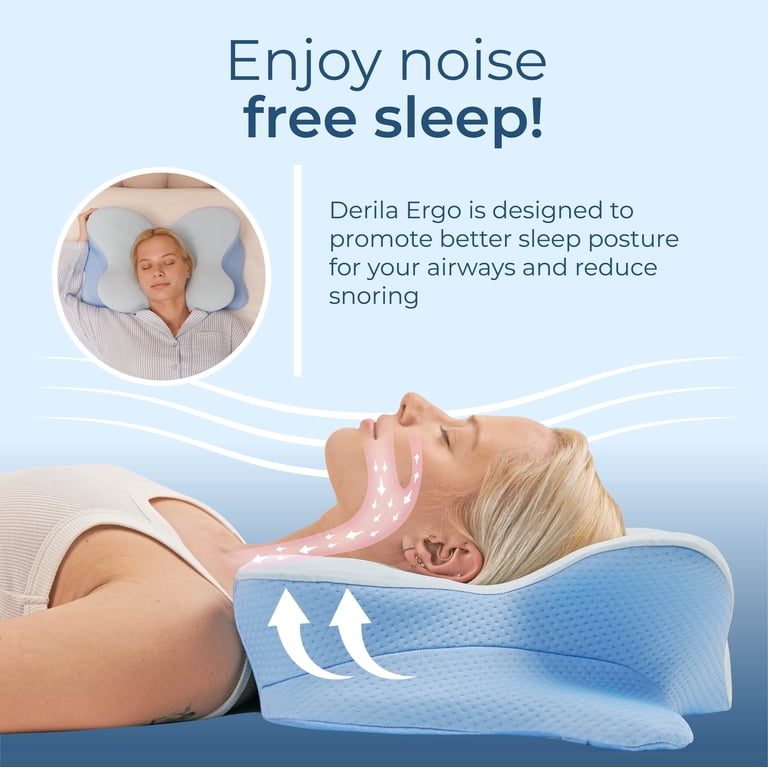
When evaluating different pillows on the market, the design and density profile of the Derila ERGO - Memory Foam Pillow offer a distinct baseline that influences how you approach softening. Unlike traditional rectangular blocks of uniform foam, an ergonomically shaped pillow features curves, contours, and recessed hollows engineered to align with the head, neck, and shoulders. Because the Derila ERGO - Memory Foam Pillow has specific structural contours, you do not want to apply haphazard bending that could warp its intended ergonomic ridges. Instead, when breaking in a contoured model like this, your goal is to soften the surface contact zones—specifically the central cradle and the raised cervical support rolls—while preserving the underlying structural geometry that provides proper spinal support. Working the material through gentle, focused kneading along these specific contours allows the foam to adapt to your shape without compromising its specialized design.
Utilizing the Derila ERGO - Memory Foam Pillow also means balancing the initial firmness against the natural settling period typical of high-density ergonomic products. Many sleepers who transition from loose fiberfill or down pillows find ergonomic memory foam uncomfortably dense during the first few nights simply because their neck muscles are not used to dedicated physical support. If your Derila pillow feels noticeably firm on arrival, treating it with standard warmth techniques and light manual flexing will help soften the outer layer quickly so you can tolerate the adaptation phase. Over several days of consistent use, body heat from your neck and head will further customize the contouring characteristics of the foam, achieving a balance where the pillow feels comfortably soft to the touch while still delivering the steady, uniform elevation needed to keep your spine neutral throughout the night.
Common Mistakes to Avoid When Trying to Soften Foam
In the rush to make a firm pillow comfortable, many sleepers resort to extreme measures that end up permanently ruining the internal structure of the foam. The most prevalent and damaging mistake is applying direct, high heat through conventional hair dr Cervical Spine Anatomy: C1–C7 Vertebrae, Muscles & Nerves yers, high-temperature dryer cycles, or placing the pillow against hot radiators. Viscoelastic polyurethane is fundamentally a synthetic polymer that will melt, scorch, or crumble when exposed to temperatures outside normal domestic comfort levels. High heat destroys the cellular memory of the pillow, leaving it either permanently flattened, brittle, or completely devoid of rebound resilience. If you choose to use gentle warmth to loosen the material, always ensure it is indirect, diffused, and never hot enough to feel scorching to bare skin.
Another frequent mistake is over-saturating the pillow with water or applying aggressive physical force that tears the delicate internal matrix. Some individuals mistakenly believe that washing or soaking a memory foam pillow will soften the fibers, but submerged foam acts like a dense sponge that traps moisture deep inside, leading to mold growth and core degradation. Similarly, while vigorous hand kneading is helpful, twisting Derila Ergo Memory Foam Pillow Review: Does It Work? Does Derila Ergo Memory Foam Pillow work for neck pain and side sleepers? See our full review covering … the pillow violently, wringing it, or bending sharp creases into thin cervical edges can cause microscopic tears that eventually propagate into full cracks. You should always treat the core with moderate, rhythmic pressure rather than sudden violent strain, and keep the protective inner cover zipped in place to distribute pressure evenly and protect the foam from friction tears.
Frequently Asked Questions About Softening Memory Foam
How long does a memory BEST Definition & Meaning - Merriam-Webster 6 days ago · In the best of all possible worlds, no one would be without food and clean water. I have a wonderful … foam pillow typically take to break in naturally?
A new memory foam pillow generally takes between two to four weeks of regular nightly use to fully break in and soften on its own. During this initial period, the daily exposure to your body heat and the sustained weight of your head steadily open up the tight polymer cells. If you do not actively knead or warm the pillow, the process will simply be slower, as the foam only relaxes while you are physically resting on it. You can speed up this timeline significantly by applying manual pressure and storing the pillow in a warm room during the day. Most users notice a marked difference in pliability and surface comfort after just a few consecutive nights of normal sleep.
Can I wash my pillow in a washing machine to make it softer?
You should never place a solid memory foam pillow inside a standard residential washing machine. The violent mechanical agitation of the wash drum and the force of the spin cycle can easily rip the solid foam block apart. Furthermore, thoroughly drying a waterlogged foam core is exceptionally difficult and creates a serious risk of internal mildew or bacterial growth. If you wish to freshen the pillow, remove and wash only the outer zippered fabric cover according to its care tag. To soften the foam core itself, rely strictly on manual kneading, body heat, and dry, room-temperature air circulation.
Does the ambient bedroom temperature really affect pillow firmness?
Yes, ambient temperature plays an enormous role in how firm or soft any memory foam pillow feels when you lie down. Viscoelastic foam is engineered to react directly to thermal shifts, growing firmer and more resistant in cool conditions and softening under warmer ambient air. If your thermostat drops significantly during the winter months, your pillow may feel noticeably stiff when you first get into bed. As your head and neck rest on the material, your natural body heat will slowly penetrate the surface and allow it to yield, but starting in a warmer room prevents that initial rigid sensation. Keeping your bedroom at a moderate, consistent temperature ensures predictable comfort and steady suppo Order Derila Pillow From Official Store | Derila rt throughout the night.
Why does my new pillow feel so Oct 15, 2026 · BEST Definition & Meaning - Merriam-Webster much harder than the sto Oct 15, 2026 · BEST | English meaning - Cambridge Dictionary best adjective, adverb (HIGHEST QUALITY) of the highest quality, to the greatest degree, in the most effective … re display model?
Retail display models feel significantly softer because hundreds of curious shoppers have squeezed, pressed, and rested on them over many months. In contrast, a brand-new pillow comes fresh from the production line, tightly wrapped or vacuum-sealed in plastic, with its internal matrix completely unworked. Factory packaging often compresses the foam tightly, temporarily locking the polymer chains in place until the material fully expands and breathes. Once unboxed, the pillow Engineered for optimal cervical support, the Derila pillow aligns your spine for deep, restorative rest. Crafted from high-density … requires time, ambient warmth, and physical movement to achieve that supple, broken-in feel seen on showroom floors. Giving your new pillow several days of manual flexing will gradually recreate that forgiving showroom feel at home.
Will Home – derilasleepcomfort Engineered for optimal cervical support, the Derila pillow aligns your spine for deep, restorative rest. Crafted from high-density … softening my ergonomic pillow reduce its ability to support my neck?
Gently breaking in an ergonomic pillow softens surface tension without eliminating the core density required for spinal alignment. Viscoelastic material is designed to distribute weight evenly, so relieving initial stiffness simply allows your head to settle comfortably into the contours rather than bouncing on top of them. As long as you avoid damaging the foam with excessive heat or aggressive tearing, the underlying structure will continue to cradle your cervical spine properly. The goal of softening is to remove uncomfortable pressure points against your ears, jaw, and neck while maintaining the structural baseline. A properly broken-in pillow often provides superior support compared to a brand-new, overly rigid one because it conforms precisely to your anatomy.