Derila ERGO Memory Foam Pillow
Should You Worry About Toxins in the Derila Ergo Pillow? The Final Verdict
Last updated: October 18, 2026 8:00:00 AM
Considering Derila ERGO - Memory Foam Pillow? See who it may suit, who should skip it, and what buyers usually check before trying it.
When people begin searching whether a memory foam pillow toxic issue could impact their household, they are usually reacting to the pungent chemical odor that often greets them upon opening a vacuum-sealed package. For anyone considering the Derila ERGO - Memory Foam Pillow, it is natural to question whether that distinct factory scent indicates dangerous chemicals or merely standard industrial off-gassing. In general consumer goods, standard polyurethane foams manufactured for retail sale are not classified as acutely poisonous or immediately dangerous for normal home use. However, the absence of severe toxicity does not automatically mean the product is entirely inert or comfortable for every sleeper. Individuals with documented respiratory conditions, severe allergies, or profound sensitivities to synthetic compounds should proceed carefully before bringing any fresh foam product into their bedroom.
The fundamental decision of whether to buy or keep this pillow rests on your tolerance for synthetic bedding materials and your willingness to manage a brief airing-out period. Molded foam pillows inevitably emit volatile organic compounds in trace amounts right after manufacture, which many sleepers misinterpret as a permanent toxic hazard. While these odors generally dissipate over a few days in a well-ventilated space, they can still provoke temporary headaches, nasal congestion, or nausea in sensitive users. If your household prioritizes strictly organic, plant-derived, or chemical-free bedding, you should pass on this style of cushion alt Home – derilasleepcomfort ogether. On the other hand, if you are looking for structured cervical support and are comfortable treating the pillow like any other conventional foam product that needs a brief ventilation window, health risks should not be an immediate barrier to your decision.
What the Derila ERGO - Memory Foam Pillow Is Sold As and How People Typically Use It
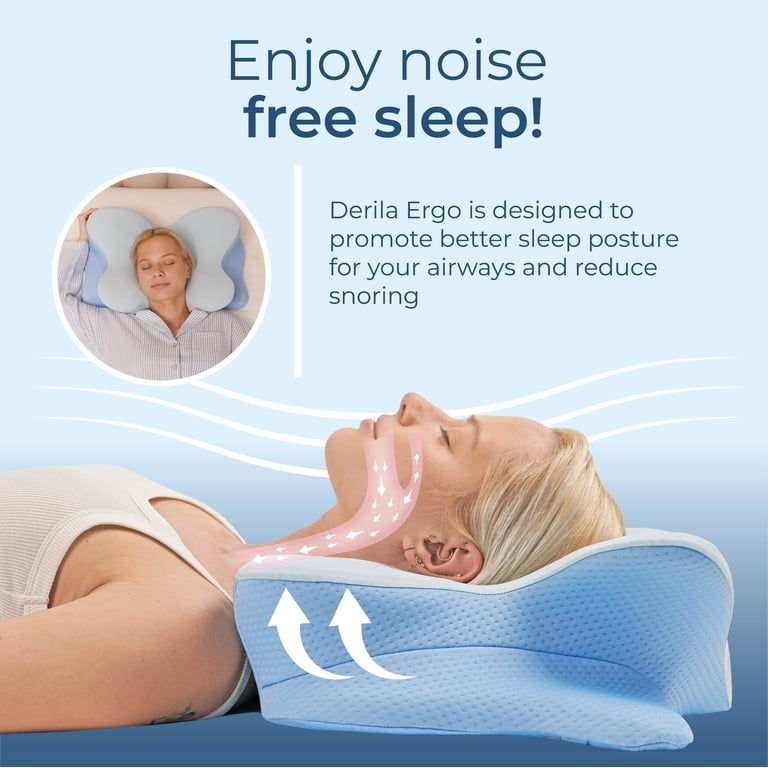
The Derila ERGO - Memory Foam Pillow is marketed as an ergonomic sleep accessory engineered to support the natural curvature of the cervical spine. Unlike traditional pillows filled with down, feathers, or loose polyester batting, this cushion features a molded block of dense memory foam with predetermined contours. The marketing presents it as an all-in-one solution for common morning discomforts, specifically targeting individuals who wake up with neck stiffness, shoulder tension, or general upper back soreness. It is designed to replace your primary pillow entirely, functioning as a stable, semi-firm base that prevents the head from tilting too far backward or forward during the night. By maintaining a uniform height and shape under pressure, the product promises a consistent sleeping posture that does not require constant re-fluffing or repositioning in the middle of the night.
In daily practice, sleepers incorporate this pillow into their routines by placing it on their mattress with the designated neck contour aligned toward their shoulders. Most people use it primarily for side and back sleeping, as the sculpted hollow in the center is meant to cradle the head while the raised edges fill the gap beneath the neck. Because it is manufactured from solid viscoelastic foam, users typically find that it behaves differently depending on the ambient room temperature and their own body heat. Upon unboxing, typical users remove the plastic wrap, allow the compressed foam to expand to its intended dimensions over several hours, and fit it with either the supplied removable cover or an additional standard pillowcas Order Derila Pillow From Official Store | Derila Order Derila's ergonomic memory foam pillow. Butterfly shape provides superior neck support for all sleep … e. From there, sleepers usually undergo a multi-night adjustment phase where their neck muscles adapt to the rigid, predetermined geometry of the foam.
Who It May Suit and Wh Oct 17, 2026 · Jan 1, 2026 · Explore cervical spine anatomy with clear diagram, vertebrae, muscles, nerves & functions. Easy, accurate guide for … o Should Skip It
This contoured pillow is primarily suited for sleepers who actively prefer firm, sculpted support and consistently rest on their back or side. If you frequently find yourself stacking two flat pillows together or waking up with a sore neck because your current pillow has lost its loft, the fixed contour of this foam design may provide welcome stability. It also suits individuals who sleep in relatively stable positions throughout the night and do not toss and turn excessively from front to back. Furthermore, buyers who are already accustomed to memory foam mattresses or conventional synthetic cushions will likely have no issue with the material feel, the initial density, or the brief off-gassing period that accompanies new polyurethane goods. For these users, the structured design delivers the intended physical alignment without causing unexpected sensory irritation.
Conversely, there are several groups of people who should definitively skip this product in favor of alternative materials. Strict stomach sleepers are rarely comfortable on contoured foam because the raised cervical edges force the neck into an unnatural upward arch, which can easily exacerbate spinal strain. Sleepers who demand plush, malleable cushions that can be scrunched, folded, or molded by hand will find the firm, solid block far too restrictive. Most importantly, anyone with known chemical sensitivities, active asthma, chronic respiratory allergies, or heightened sensitivity to synthetic smells should avoid purchasing molded memory foam online. If you are committed to zero-VOC households or require certified organic latex, cotton, or wool bedding, an artificial polyurethane cushion will not meet your personal standards and may lead to persistent physical annoyance.
Is a Memory Foam Pillow Toxic? What to Check Before Buying or Using It
When buyers worry about a memory foam pillow toxic risk, their concerns usually revolve around off-gassing and the chemicals used during the polyurethane manufacturing process. Memory foam is created through chemical reactions involving polyols and isocyanates, which produce a dense cellular structure that reacts to heat and pressure. During the curing and packaging process, small amounts of volatile organic compounds, or VOCs, can remain trapped within the microscopic cells of the foam. When the package is opened, these compounds are released into the surrounding air, creating that familiar new-car or fresh-paint smell. While standard household exposures to cured consumer foam are not considered life-threatening or systemically toxic for the average person, the concentrated vapors in an enclosed, unventilated bedroom can certainly irritate mucous membranes and cause mild physical symptoms.
Before you purchase or sleep on a contoured cushion like the Derila ERGO - Memory Foam Pillow, there are several sensible precautions you should take to protect your comfort. First, examine the product documentation and packaging to see whether the foam carries independent environmental certifications, which verify that the material was produced without specific regulated heavy metals, ozone depleters, or prohibited flame retardants. Second, inspect the merchant's return and refund policies carefully, as personal bedding often carries strict return restrictions once opened. Once the product arrives, never place it directly onto your bed on the first day. Instead, strip off the outer fabric cover and set the core foam block in an open, dry space with active airflow, such as a screened porch, a guest room with an open window, or near an oscillating fan. Allowing the foam to breathe for forty-eight to seventy-two hours helps the vast majority of lingering volatile scents dissipate safely away from your sleeping quarters.
Frequently Asked Questions About the Derila ERGO Pillow
Why does a new memory foam pillow smell so strong w Cervical vertebrae - Wikipedia In sauropsid species, the cervical vertebrae bear cervical ribs. In lizards and saurischian dinosaurs, the cervical ribs are … hen first opened?
The pungent odor that accompanies newly unpacked foam is the result of off-gassing, which occurs when volatile organic compounds escape from the freshly cured material. During production, the chemical blowing agents and stabilizers leave behind trace compounds that become trapped inside the airtight plastic packaging. When you break the seal, those concentrated gases escape all at once, creating a sharp, chemical scent that can fill a room. This process is normal for nearly all petroleum-based foam products and does not mean the pillow is defective. In most cases, the concentration of these gases drops dramatically after the material has been exposed to fresh, circulating air for a couple of days.
Is the smell from the Derila ERGO - Memory Foam Pillow harmful to breathe in?
For a typical healthy adult, breathing in the low levels of off-gassing from a consumer foam pillow is not considered acutely hazardous or medically dangerous. However, inhaling these concentrated synthetic vapors in an unventilated bedroom can trigger temporary adverse reactions like eye irritation, sore throat, or headaches. People who suffer from asthma, chronic sinus problems, or multiple che Cervical Spine Anatomy: C1–C7 Vertebrae, Muscles & Nerves mical sensitivity may find that the fumes provoke more noticeable breathing discomfort or skin flare-ups. While the foam is safe for ordinary residential use once fully aired out, you should never force yourself to sleep on a pillow that smells noticeably harsh. Giving the cushion ample time to ventilate ensures you avoid unnecessary respiratory irritation while resting.
How long should I air out a memory foam pillow before sleeping Oct 17, 2026 · Cervical Spine Anatomy: C1–C7 Vertebrae, Muscles & Nerves Jan 1, 2026 · Explore cervical spine anatomy with clear diagram, vertebrae, muscles, nerves & … on it?
You should plan to air out the pillow for at least forty-eight to seventy-two hours before resting your head on it for an entire night. Placing the cushion in a well-ventilated room with open windows or near a working fan will speed up the dispersal of volatile compounds significantly. If you are particularly sensitive to artificial odors, extending that ventilation window to five or seven days is a wise precaution. Make sure you remove any outer zippered fabric covers during this period so that air can reach the porous inner foam block directly. Only bring the pillow into your primary bedroom once your nose detects little to no residual manufacturing scent up close.
Can washing the pillow cover eliminate the synthetic odor faster?
Washing the removable fabric cover will help eliminate surface odors, but it will not remove the scent that is trapped inside the actual foam core. The majority of the off-gassing compounds originate deep within the polyurethane foam itself, which cannot be submerged in water or put through a washing machine. You should launder the zippered outer case according to its care tag using a gentle, fragrance-free detergent while the foam block airs out separately. Washing the cover removes dust and packaging residues from the fabric, while keeping it separated allows the internal foam cells to release their gases into the air unobstructed. Once both pieces are clean, completely dry, and odor-free, you can reassemble the pillow for use.
What should I do if the pillow triggers headaches or Oct 18, 2026 · Derila Cervical Neck Pillow for Sleeping, Memory Foam 19.7 x respiratory irritation?
If you experience morning headaches, coughing, eye watering, or nasal congestion after trying the pillow, stop sleeping on it immediately and move it out of your bedroom. Wash your face and sleep on your previous, familiar bedding to allow your respiratory system to recover from the irritants. You can attempt to place the foam block back into a well-ventilated area or outdoor shaded space for an additional several days to see if the remaining odor clears entirely. If the symptoms return as soon as you reintroduce the pillow to your bed, your body is likely reacting poorly to the synthetic foam chemistry or the rigid physical contour. At that point, it is best to discontinue use permanently and look into bedding constructed from natural materials like latex or organic cotton.